Curriculum development for a Sociology of Family course
Situation
Bellevue University required a fully developed, asynchronous undergraduate sociology course that addressed complex family dynamics, social inequality, and contemporary societal issues while supporting diverse adult learners in an online environment.
Task
I was responsible for designing a complete, outcomes-aligned curriculum—including syllabus, learning objectives, assessments, instructor guide, and instructional activities—that balanced academic rigor with engagement, accessibility, and real-world relevance.
Action
I designed a 12-week course (and a truncated 10-week course) grounded in sociological theory and evidence-based pedagogy, integrating scaffolded learning objectives, discussion-based assessments, quizzes, applied media (videos, ethnographies), and a structured book-club model to deepen critical thinking. Evaluation was embedded throughout the course via cumulative quizzes, milestone assignments, rubrics, and formative discussion prompts to continuously assess learning and adjust instructional emphasis.
Result
The final curriculum delivered a cohesive, learner-centered experience that supported critical analysis, intersectional thinking, and applied sociological reasoning. The course structure ensured alignment between objectives, instruction, and assessment while providing instructors with clear evaluation tools to measure learning outcomes and student engagement across the semester.
Methods & Tools: Curriculum mapping · Learning objectives alignment · Assessment design · Rubric development · Formative & summative evaluation · Online/asynchronous pedagogy
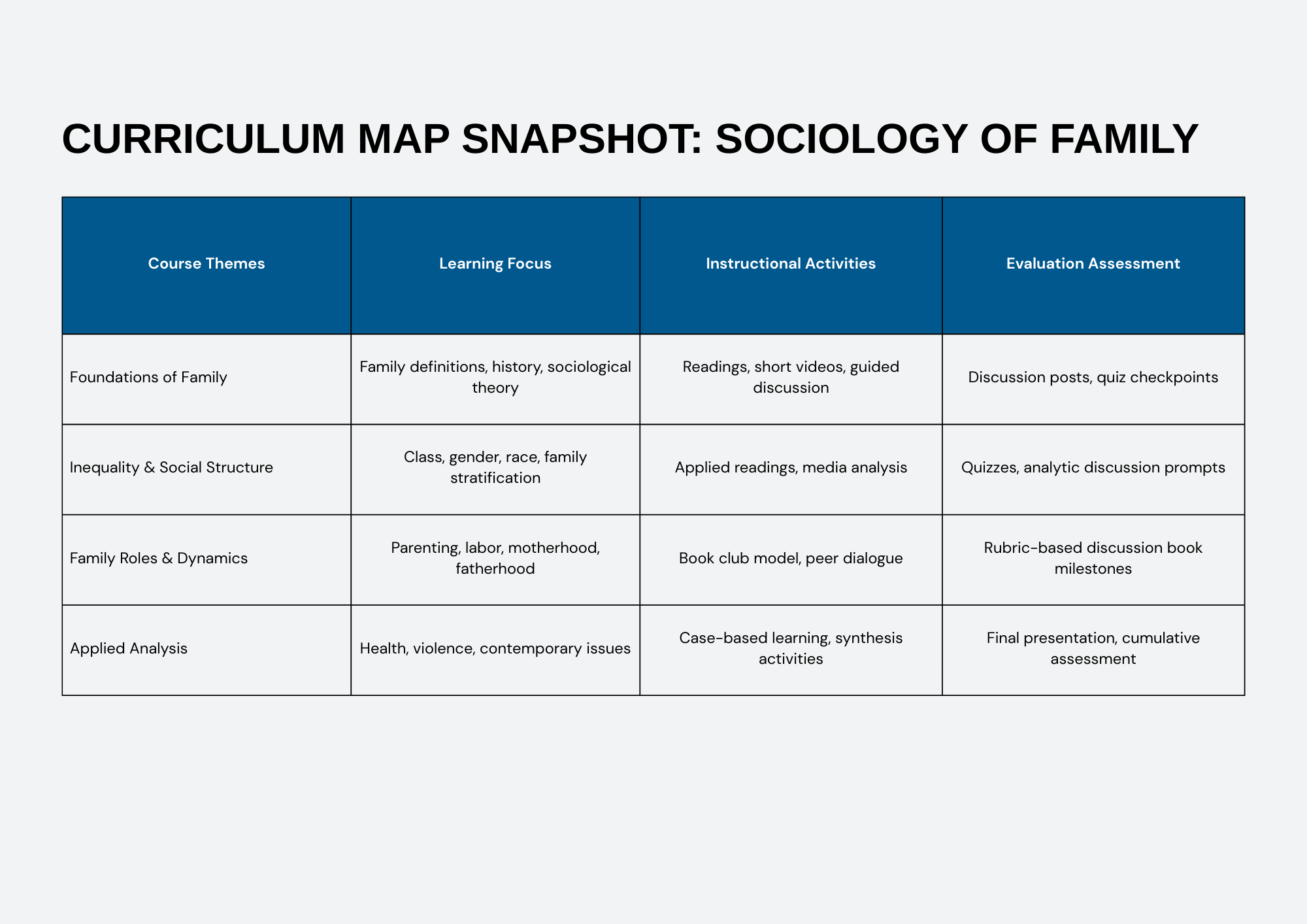
Curriculum structure showing alignment between learning objectives, instructional activities, and embedded evaluation methods.
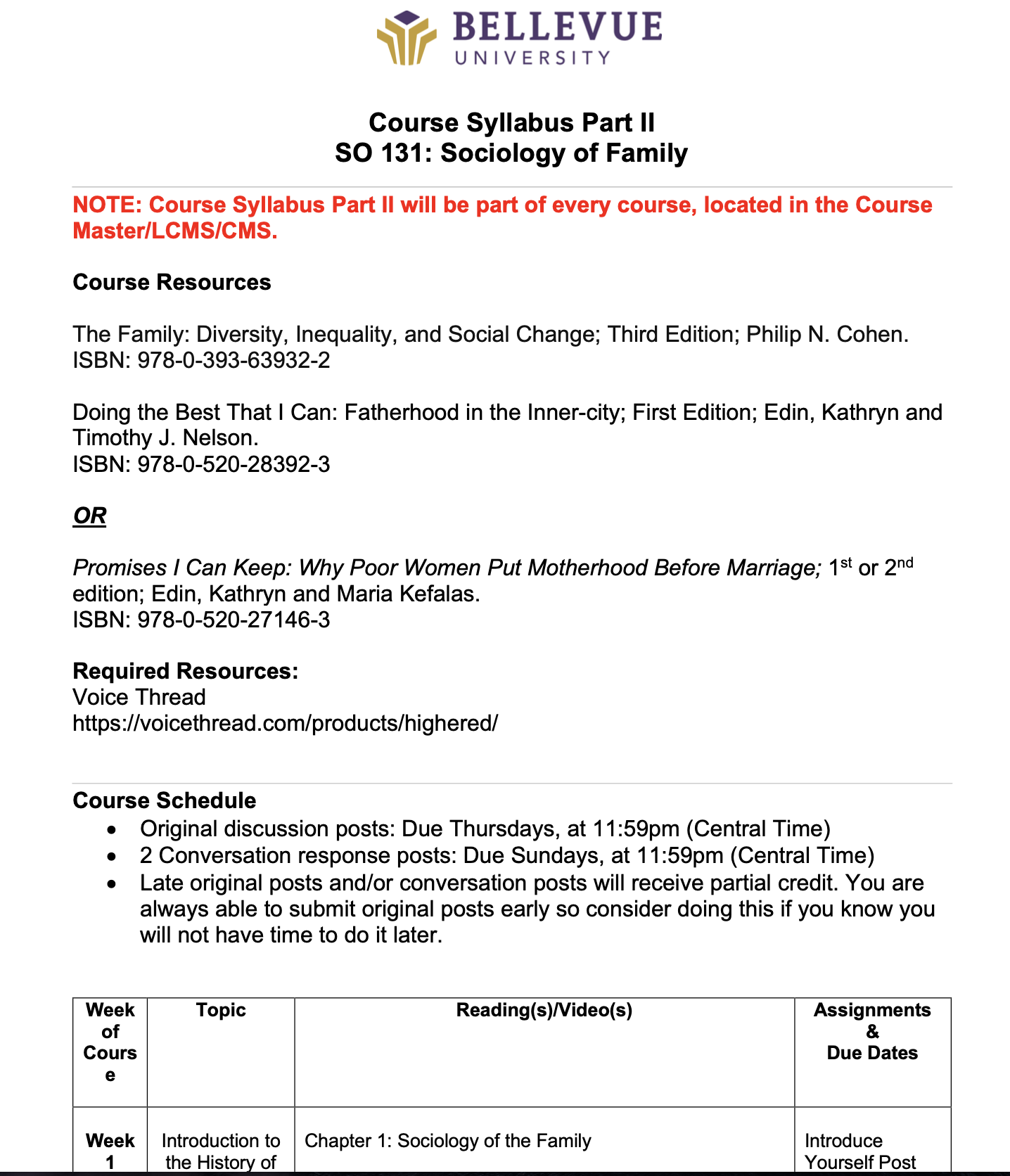
Course syllabus outlining learning objectives, assessment structure, weekly instructional flow, and new technology integration using VoiceThread.
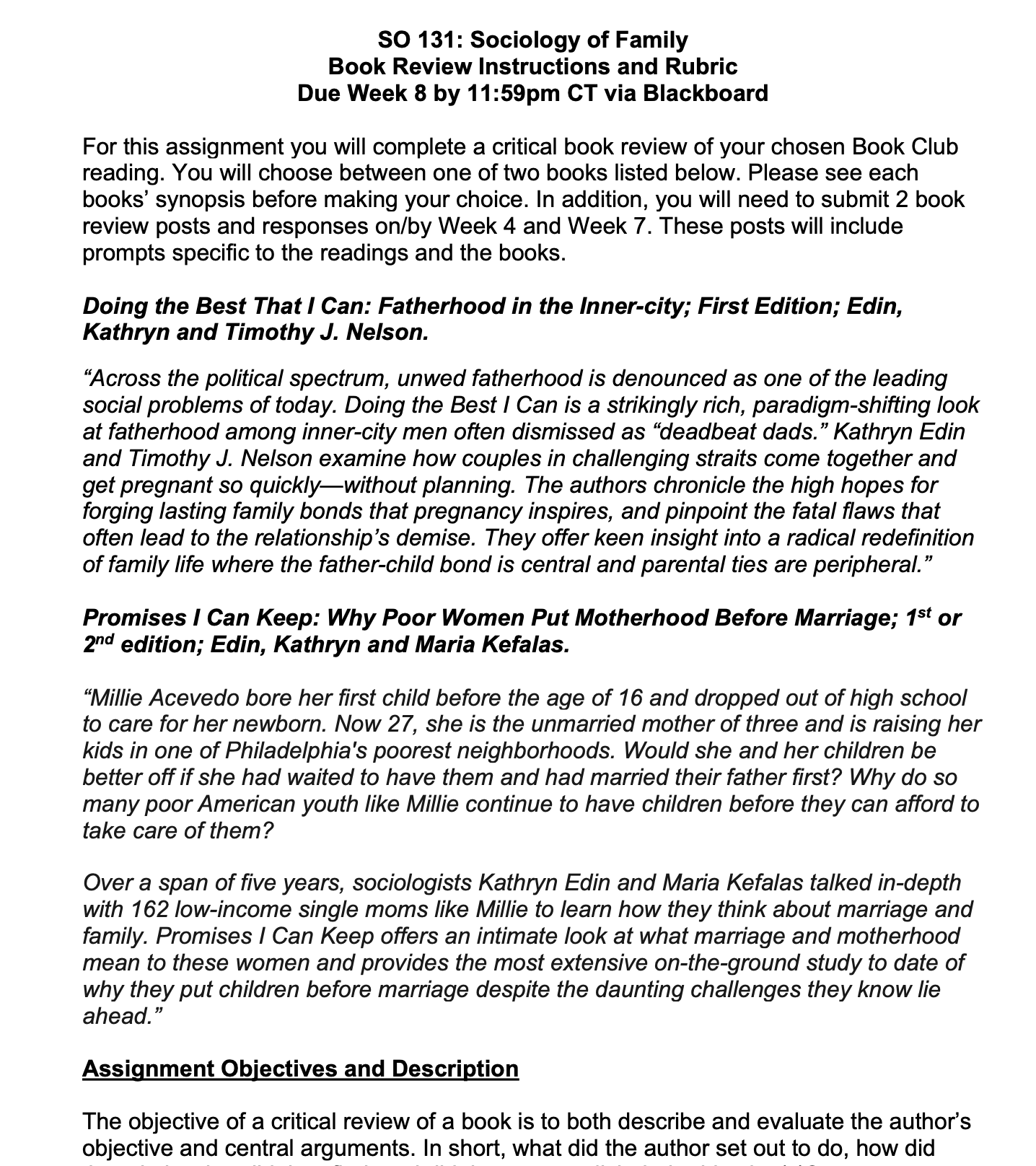
Analytical book review designed to assess research quality, theoretical framing, and applied sociological insights.